
How to Build an AI Micro-SaaS for "Meeting Fatigue" in 2026 [Playbook]
![How to Build an AI Micro-SaaS for "Meeting Fatigue" in 2026 [Playbook]](/_next/image?url=https%3A%2F%2Fimages.unsplash.com%2Fphoto-1517048676732-d65bc937f952%3Fw%3D1200%26h%3D630%26fit%3Dcrop&w=3840&q=75)
How to Build an AI Micro-SaaS for "Meeting Fatigue" in 2026 [Playbook]
You have likely sat through a two-hour sync call that could have been a three-bullet Slack message. We all have. In 2026, "meeting fatigue" isn't just a corporate buzzword—it is a massive, bleeding-neck problem for remote teams, async-first startups, and fast-moving agencies.
Founders and managers are desperate to reclaim their time. They don't want another massive enterprise software suite that takes three months to deploy. They want a surgical, unsexy tool that plugs the leak immediately. This is exactly where nimble indie hackers have a massive, unfair advantage over the lumbering giants of the tech world.
The opportunity lies in building a highly targeted AI micro-SaaS. Instead of trying to build the next comprehensive HR platform, you build a simple, focused AI summary layer that integrates directly into the tools these teams already use, like Slack or Discord. It is quick to build, cheap to run, and incredibly easy to sell.
If you are tired of building consumer apps that churn users after a week, it is time to pivot to B2B micro-SaaS. This guide will walk you through the exact blueprint for capitalizing on the meeting fatigue epidemic. We are going to cover the core concept, why solo devs are perfectly positioned to win this market, and a step-by-step implementation plan you can start executing this weekend.
The Core Concept: A Surgical AI Summary Layer
The core premise of curing meeting fatigue isn't about eliminating communication; it is about eliminating synchronous communication overhead. Remote teams are drowning in noise. Threads in Slack or Discord spiral out of control, spanning dozens of messages, multiple tangents, and lost action items. When a team member logs in after a few hours offline, they face a wall of text they have to parse to figure out what happened.
This is where your AI micro-SaaS steps in. You are building a lightweight bot that watches specific channels or threads, digests the chaos, and spits out a clean, formatted summary. It identifies decisions made, action items assigned, and outstanding questions. It turns a 50-message thread into a three-bullet digest.
Think about the value proposition here. You aren't selling "AI." You are selling time. You are selling the ability for a developer to stay in deep work mode for four hours without fear of missing a critical product decision. You are selling the peace of mind that comes with knowing you can catch up on a full day's worth of chatter in two minutes. This is a highly tangible, easily justifiable expense for any agency owner or startup founder.
Your target audience is fiercely specific: remote-first teams, asynchronous startups, and digital agencies. These are businesses where communication happens entirely online and where time equals money. They already understand the problem intimately. You do not need to educate them on why meeting fatigue is bad; you only need to show them that your tool is the fastest way to relieve the pain.
From a revenue perspective, the math is incredibly attractive for a solo founder. This isn't a high-ticket enterprise sale with a six-month sales cycle. This is a frictionless, self-serve product priced at $10 to $20 per month per team. Because it solves a daily, recurring problem, the churn will be remarkably low. If you can acquire just 100 teams—a drop in the ocean of the B2B market—you have a $1,000 to $2,000 MRR business that runs almost entirely on autopilot.
Want more tactics like this? Join 10,000+ indie hackers getting our daily digest. We tear down profitable micro-SaaS ideas every single day. Subscribe to IndieRadar — it's free.
Why Indie Hackers Have the Unfair Advantage
When you look at a problem this widespread, the immediate instinct is to assume that Google, Microsoft, or some well-funded Y-Combinator startup will crush you. But in the micro-SaaS space, being small isn't a weakness; it is your greatest asset. Enterprise companies are structurally incapable of building simple things.
Big tech companies suffer from product bloat. If Microsoft tries to solve meeting fatigue, they will build a massive, integrated suite within Teams that requires IT approval, compliance checks, and a mandatory onboarding webinar. Startup teams do not want that. They want a bot they can invite to a Slack channel with two clicks that just starts working. As an indie hacker, you can deliver exactly that frictionless experience. You have zero bureaucratic overhead.
Furthermore, the technical barrier to entry has never been lower. You do not need a PhD in machine learning to build this. You are leveraging existing LLM APIs (like OpenAI, Anthropic, or open-source models) and the robust webhooks provided by Slack and Discord. The underlying technology is commoditized. Your value is in the integration, the prompt engineering, and the specific workflow you design. You are simply connecting the pipes in a way that solves a specific business pain.
The distribution model is also inherently favorable to solo developers. This type of product has product-led growth (PLG) baked into its DNA. When a team manager installs your bot in a shared Slack channel, every member of that team instantly sees the value it provides. When someone from that team leaves to join another company, they will remember the tool that saved them hours of reading and introduce it to their new team. It is a viral loop that requires zero ad spend.
You can iterate faster, ship quicker, and respond to user feedback in real-time. If a user requests a specific formatting tweak for the summaries, you can push the code in an hour. An enterprise company would need to put that request into a Jira backlog for the next quarter. In the battle for niche utility tools, speed and simplicity always beat scale and complexity.
Implementation Blueprint: From Zero to MVP
You understand the problem, the solution, and why you are the right person to build it. Now it is time to execute. This isn't a project you should spend three months perfecting in secret. This is an MVP you can, and should, hack together over a single weekend.
Step 1: Hooking into the APIs
The first technical hurdle is capturing the data. You need to set up an integration with Slack or Discord. Start with just one platform to keep your scope narrow—Slack is generally better for B2B monetization. You will need to create a Slack App and configure it to listen to the Events API, specifically for messages in channels where the bot is invited.
Do not overengineer the backend. A simple Node.js or Python server running on Vercel, Render, or Railway is more than enough to handle the incoming webhooks. Your architecture should look like this: receive webhook event from Slack -> store message in a temporary, secure database (like Supabase or standard Postgres) -> trigger the LLM summarization when a specific condition is met (e.g., a slash command or a time interval).
Security and privacy are paramount here. You are handling company communications. Make it explicitly clear in your documentation that you do not train models on their data and that you only retain messages long enough to generate the summary. Trust is the currency of B2B micro-SaaS. If you mess up their data privacy, you are dead in the water.
Step 2: Ruthless Prompt Engineering
The LLM integration is the easiest part technically, but the hardest part to get right functionally. If your bot just spits out a generic, rambling paragraph, nobody will pay for it. The output must be incredibly crisp, structured, and instantly readable. This requires ruthless prompt engineering.
You are not just asking the AI to "summarize this text." You need to provide a rigid framework. Your prompt should instruct the LLM to identify specific entities: who is doing what, what decisions were finalized, and what questions remain unanswered. Force the output into a specific JSON structure or markdown format so you can reliably render it back in Slack.
For example, your system prompt should look something like: "You are an executive assistant. Analyze the following chat log. Output a strict markdown format with three sections: 1. Core Decisions (bullet points). 2. Action Items (Format: @User - Task). 3. Open Questions. Do not add conversational filler. Be ruthless with word count." You will need to iterate on this prompt dozens of times with real-world, messy chat data to get it right.
Step 3: The Monetization Strategy
Do not wait to monetize. Build billing into your MVP from day one. If people will not pay for the core utility, adding more features won't change their minds. For a micro-SaaS like this, a usage-based freemium model is highly effective.
Offer a free tier that allows a team to generate, for instance, 20 summaries per month. This is enough for them to experience the "aha!" moment and integrate the bot into their workflow. Once they hit the limit, gate the service behind a hard paywall. Use Stripe Checkout for a frictionless upgrade path. Keep pricing dead simple: a flat rate of $15/month for unlimited summaries within a single Slack workspace.
Avoid complex per-user pricing at this stage. It creates friction for the buyer, who then has to calculate costs and get approval for headcount. A flat workspace fee is a rounding error for a profitable agency. Make it so cheap and so valuable that expensing it is a no-brainer.
Conclusion: Stop Thinking, Start Shipping
The "meeting fatigue" epidemic isn't going away. As remote work continues to mature, the volume of asynchronous noise will only increase. Teams are desperately looking for life rafts in the sea of Slack notifications. You have the tools, the blueprint, and the agility to build that life raft.
You do not need permission to start. You do not need VC funding. You need a weekend, an OpenAI API key, and a willingness to solve a boring, highly specific problem. Build the MVP. Get it into the hands of five agency owners. Watch how they use it. Iterate based on their feedback.
If you can save a team just five hours of reading per week, you have built a wildly successful product. The micro-SaaS playbook is simple: find a bleeding neck, apply a highly targeted bandage, and charge a reasonable recurring fee. Now go build it.
FAQ
Is it hard to get approved for the Slack App Directory? It takes some effort, as they have strict privacy and security reviews. However, you don't need to be in the directory to get your first 100 customers. Users can install your app via a direct OAuth link while it's unpublished. Get revenue first, then worry about directory approval.
What about data privacy? Won't companies be afraid to use this? Yes, which is why your privacy policy must be bulletproof. Explicitly state that messages are only held in memory or a temporary cache to generate the summary, and that you opt-out of all LLM data training. Use APIs (like OpenAI's API) that have strict non-training clauses by default.
Should I build this for Microsoft Teams too? Not initially. Slack and Discord are far friendlier for indie developers and have massive ecosystems of tech-forward startups. Microsoft Teams is heavily skewed towards large enterprises with complex procurement processes. Stick to the easy wins first.
What if an open-source model is cheaper than OpenAI?
It might be, but optimize for speed and output quality first. OpenAI's gpt-4o-mini or Anthropic's claude-3-haiku are incredibly cheap and fast. Don't waste a week setting up a local LLM server just to save fractions of a cent on your MVP. Validate the business model, then optimize costs later.
Ready to ship smarter?
That's it. Curing meeting fatigue is a perfect micro-SaaS opportunity — low complexity, high value, and recurring revenue. We send tactics and teardowns exactly like this every single day to 10,000+ indie hackers. If you're serious about building profitable software, join IndieRadar — it's free.
More in SaaS Tactics Series
Don't miss these related deep dives.
![The TikTok Method: How to Find Viral App Ideas Every Day [2026 Guide]](/_next/image?url=https%3A%2F%2Fvspskxbwtvwkwolfsiil.supabase.co%2Fstorage%2Fv1%2Fobject%2Fpublic%2Fposts_cover_images%2FTwitter%2520post%2520-%252026.png&w=3840&q=75)
The TikTok Method: How to Find Viral App Ideas Every Day [2026 Guide]
Stop overthinking app ideas. Use TikTok trends, search insights, and competitor analysis to find validated ideas daily.
![How to Secure AI Generated Code: 5-Step Playbook for Solo Devs [2026]](/_next/image?url=https%3A%2F%2Fimages.unsplash.com%2Fphoto-1526374965328-7f61d4dc18c5%3Fw%3D1200%26h%3D630%26fit%3Dcrop&w=3840&q=75)
How to Secure AI Generated Code: 5-Step Playbook for Solo Devs [2026]
AI coding agents help you ship faster, but they also write vulnerable code. Here is the exact 5-step playbook to secure AI generated code before you launch.

Profitable AI Micro-SaaS Ideas in 2026: Stop Building ChatGPT Wrappers
The market for generic AI tools is dead. Here’s how indie hackers can print money in 2026 by targeting hyper-specific niches, plus 5 actionable ideas you can launch this weekend.

If I Had to Start a SaaS From Scratch in 2026: A Blueprint for Indie Hackers
The exact 6-step game plan to start a SaaS from zero in 2026. Stop building first. Start with the audience, build a 7-day MVP, and launch small.
![The Multi-Product Playbook: How to Build a Portfolio of Apps That Print Money [2026 Guide]](/_next/image?url=https%3A%2F%2Fvspskxbwtvwkwolfsiil.supabase.co%2Fstorage%2Fv1%2Fobject%2Fpublic%2Fposts_cover_images%2FTwitter%2520post%2520-%252031.png&w=3840&q=75)
The Multi-Product Playbook: How to Build a Portfolio of Apps That Print Money [2026 Guide]
Stop betting everything on one app. Here's the step-by-step playbook for building a portfolio of small software products that cross-sell and compound.
![GEO for SaaS: The 5-Minute Playbook to Get AI to Recommend Your Product [2026 Guide]](/_next/image?url=https%3A%2F%2Fvspskxbwtvwkwolfsiil.supabase.co%2Fstorage%2Fv1%2Fobject%2Fpublic%2Fposts_cover_images%2FTwitter%2520post%2520-%252023.png&w=3840&q=75)
GEO for SaaS: The 5-Minute Playbook to Get AI to Recommend Your Product [2026 Guide]
Learn how to optimize your SaaS for ChatGPT, Perplexity, and Claude in under 5 minutes. Copy-paste code included.
![Open Source Marketing Playbook for Indie Hackers [2026 Guide]](/_next/image?url=https%3A%2F%2Fvspskxbwtvwkwolfsiil.supabase.co%2Fstorage%2Fv1%2Fobject%2Fpublic%2Fposts_cover_images%2FTwitter%2520post%2520-%252018.png&w=3840&q=75)
Open Source Marketing Playbook for Indie Hackers [2026 Guide]
Open source is the best free marketing channel for bootstrapped founders in 2026. Here's the full playbook to turn GitHub into a growth engine.
![The 2-Hour Daily Routine That Beats Building More Features [2026 Indie Hacker Playbook]](/_next/image?url=https%3A%2F%2Fvspskxbwtvwkwolfsiil.supabase.co%2Fstorage%2Fv1%2Fobject%2Fpublic%2Fposts_cover_images%2FTwitter%2520post%2520-%252017v2.png&w=3840&q=75)
The 2-Hour Daily Routine That Beats Building More Features [2026 Indie Hacker Playbook]
Stop hiding behind code. Here's the exact 2-hour daily routine that scales SaaS faster than any feature ever will.
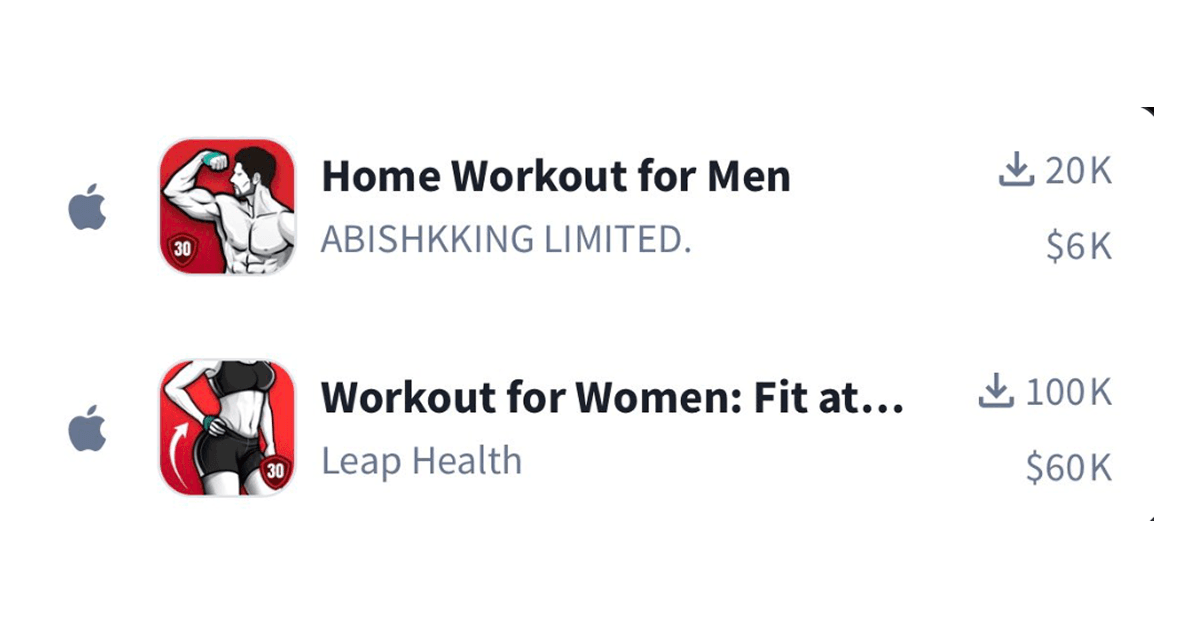
The "Pink" Strategy: Why Building Apps for Women is the Cheat Code of 2026
Men want free tools. Women pay for value. Here's the data-backed strategy indie hackers are using to 10x revenue by pivoting from "generic" to "female-focused."
![Why Every Successful App Has a Mascot Now [2026 Guide to Character-Driven Design]](/_next/image?url=https%3A%2F%2Fimages.unsplash.com%2Fphoto-1551651653-c5186a1fbba2%3Fw%3D1200%26h%3D630%26fit%3Dcrop&w=3840&q=75)
Why Every Successful App Has a Mascot Now [2026 Guide to Character-Driven Design]
Mascots are taking over top-grossing apps. Here's why character-driven design converts better and how to add one to your product.
IndieRadar Team
Daily newsletter for indie hackers. We analyze 10,000+ tweets and deliver the signal.
Read Next
The Multi-Product Playbook: How to Build a Portfolio of Apps That Print Money [2026 Guide]
Stop betting everything on one app. Here's the step-by-step playbook for building a portfolio of small software products that cross-sell and compound.
Read articleIf I Had to Start a SaaS From Scratch in 2026: A Blueprint for Indie Hackers
The exact 6-step game plan to start a SaaS from zero in 2026. Stop building first. Start with the audience, build a 7-day MVP, and launch small.
Read articleProfitable AI Micro-SaaS Ideas in 2026: Stop Building ChatGPT Wrappers
The market for generic AI tools is dead. Here’s how indie hackers can print money in 2026 by targeting hyper-specific niches, plus 5 actionable ideas you can launch this weekend.
Read article