
The "Pink" Strategy: Why Building Apps for Women is the Cheat Code of 2026
The "Pink" Strategy: Why Building Apps for Women is the Cheat Code of 2026
If you want to play the startup game on hard mode, build developer tools for men. They will roast your code on Hacker News, demand a lifetime deal for $5, and then clone your open-source repo to host it themselves.
If you want to make money? Build for women.
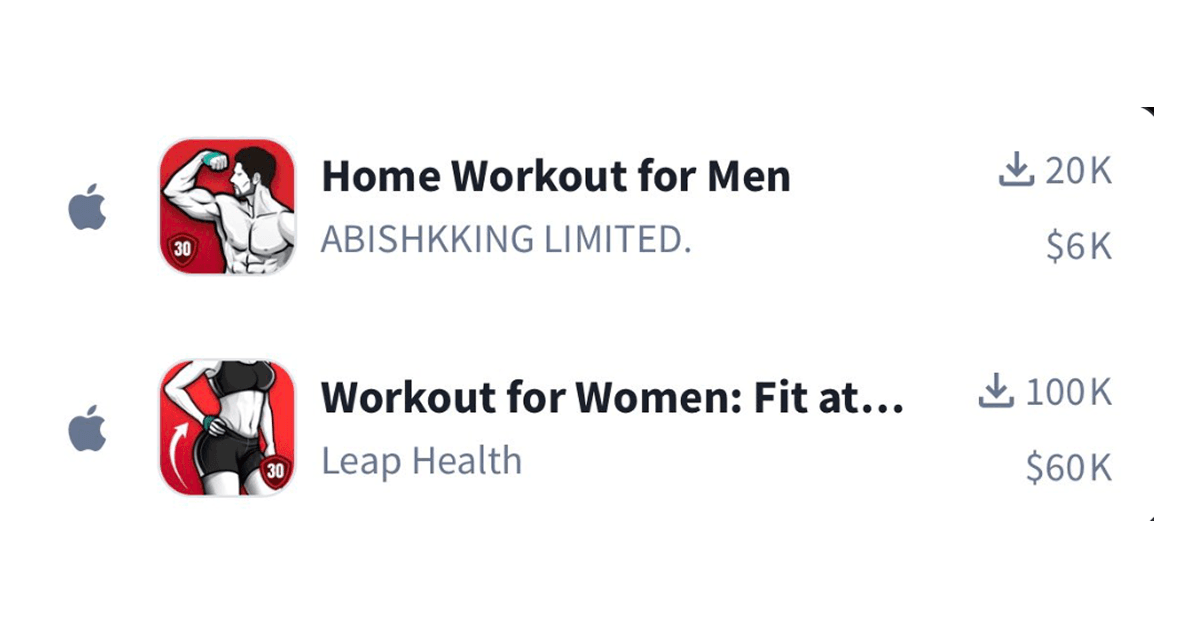
It sounds like a generalization, but the revenue data in 2026 is undeniable. In vertical after vertical—fitness, productivity, wellness, journaling—apps positioned specifically for women are outperforming their gender-neutral or male-focused counterparts by a factor of 10x.
This is the "Pink Strategy." It's not about pandering or just changing a hex code. It's about recognizing a fundamental difference in purchasing behavior.
TL;DR
- The Gap: Women are 30% more likely to pay for subscriptions than men in lifestyle categories.
- The "Pink" Arbitrage: Identical functionality packaged for women often commands 3-5x higher pricing.
- The Execution: Don't just "shrink and pink." Adapt the copy, the aesthetic, and the community aspect.
- The Result: We're seeing "boring" apps pivot to female audiences and jump from $5k MRR to $50k MRR in months.
The Economics of Targeted Audiences
Let’s look at the cold, hard numbers. The male demographic, particularly in the tech/indie hacker space, is obsessed with utility per dollar. We want the raw tool. We want to configure it ourselves. And we hate paying for things we think we could build in a weekend.
Women, statistically, value experience, convenience, and aesthetic Design.
When you build a generic "Habit Tracker," you are competing with free spreadsheets and Notion templates. But when you build a "Self-Care Ritual Tracker for Busy Moms," you are solving a specific emotional problem. You aren't selling a checklist; you're selling peace of mind.
The difference in willingness to pay is staggering. A generic utility app struggles to sell a $5/month sub. A specialized lifestyle app for women easily commands $19.99/month or more.
Case Study: The "Journaling" Split
Let's look at a hypothetical scenario based on real market trends we're seeing right now.
App A: "LogOne" (Target: Men/General)
- Value Prop: "Distraction-free markdown journaling. Encrypted locally."
- Aesthetic: Dark mode, monospace font, zero fluff.
- Price: $4.99/month.
- User Feedback: "Why isn't this free? I can just use Obsidian."
- Revenue: $4,500 MRR.
App B: "MindfulMorning" (Target: Women)
- Features: Literally the exact same backend code as LogOne.
- Value Prop: "Start your day with intention. Daily prompts for clarity and calm."
- Aesthetic: Soft gradients, serif typography, "streak" animations that feel rewarding, not punishing.
- Price: $12.99/month.
- User Feedback: "This app changed my morning routine! I love the daily quote."
- Revenue: $42,000 MRR.
The code is 90% the same. The positioning is 100% different. The revenue is 10x.
This isn't an uncommon outlier. In the fitness space, the disparity is even wilder. "Gym Log Pro" (for men) fights for scraps. "Pilates & Core for Her" prints money. Why? Because "Gym Log Pro" is competing on features (sets, reps, graphs). The Pilates app is competing on identity and results.
Want to spot more market gaps like this?
We analyze hundreds of indie launches every week to find the patterns that are actually making money. Stop guessing and start cloning what works.
How to Execute the "Pink Pivot"
So, you have a stagnant app. Should you just slap a pink logo on it? No. That’s lazy and consumers are smart. They can smell a low-effort cash grab.
Here is the playbook to doing this correctly in 2026.
1. Aesthetic is a Feature, Not a Wrapper
For male-focused dev tools, UI is often secondary to function. "If it works, it works." For this market, UI is part of the function. The app needs to feel good to use. Transitions should be smooth. Empty states should be encouraging, not blank. If your app looks like a Jira ticket, you’ve already lost.
Actionable tip: Go to Pinterest, not Dribbble. Search for "digital planner aesthetic" or "mood board 2026." That is your design system.
2. Change the Language
Men often respond to language about optimization, speed, and power.
- "Track your lifts."
- "Optimize your workflow."
- "Crush your goals."
The female-focused market often responds better to language about wellness, balance, and growth.
- "Nourish your body."
- "Find your flow."
- "Design your life."
It’s the same action. It’s just framed differently.
3. Community Over Competition
In male-focused apps, the "social" aspect is often a leaderboard. Who is lifting the most? Who committed the most code? In female-focused apps, the "social" aspect is support. A shared feed of wins, a "we're in this together" vibe. Building a community feature where users can encourage each other (safely) can be a massive retention lever.
The Validity Test
Before you go rebuild your entire SaaS, run the test.
- Spin up a landing page for the "female-focused" version of your idea.
- Run ads targeting specific interests on Instagram/TikTok (not Twitter/X).
- Measure the CTR and Waitlist signups.
You will likely find that your Cost Per Click (CPC) is lower and your conversion rate is higher than whatever tech-bro niche you were targeting before.
Why This Works (The Psychology)
It comes down to this: Emotional ROI.
When a developer buys a tool, he calculates the time saved vs. the cost. It's a logic puzzle. "I can save 2 hours a month, so $5 is worth it."
When someone buys a lifestyle app that promises to make them feel healthier, more organized, or more at peace, the ROI isn't calculated in hours. It's calculated in feeling. And the price tag for "feeling good about myself" is infinitely higher than "saving 20 minutes of coding."
FAQ
Is this manipulative? No. It’s segmentation. Nike makes shoes for men and shoes for women. They fit differently and are marketed differently. Software is no distinct. You are tailoring a product to fit the specific needs and desires of a specific customer base.
Can I just re-skin my existing app? Technically, yes. But you should probably fork it. Keep your "Pro Tool" for the power users if it’s making money. Spin off the "Lifestyle" version as a separate brand. Do not try to serve both masters with one homepage.
What specific niches work best? Health & Fitness (Pilates, Yoga, cycle tracking), Mental Health (Journaling, affirmations, CBT), Organization (Family planners, budget trackers), and Education (Language learning, skill building).
Do I need a female co-founder? It helps immensely. If you are a solo male founder, you have blind spots. Bringing on a female co-founder or at least a consultant to handle the copy and design direction is the smartest money you can spend.
The Bottom Line
You can keep fighting for the $5 subscriptions from users who run ad-blockers and complain about your release notes.
Or you can build for an audience that values design, supports one another, and is happy to pay for products that improve their lives.
The choice is yours. But the smart money in 2026 is pivoting.
Serious about building profitable products? We send insights like this daily. No fluff, just tactics. Join IndieRadar for free →
More in SaaS Tactics Series
Don't miss these related deep dives.
![The TikTok Method: How to Find Viral App Ideas Every Day [2026 Guide]](/_next/image?url=https%3A%2F%2Fvspskxbwtvwkwolfsiil.supabase.co%2Fstorage%2Fv1%2Fobject%2Fpublic%2Fposts_cover_images%2FTwitter%2520post%2520-%252026.png&w=3840&q=75)
The TikTok Method: How to Find Viral App Ideas Every Day [2026 Guide]
Stop overthinking app ideas. Use TikTok trends, search insights, and competitor analysis to find validated ideas daily.
![How to Build an AI Micro-SaaS for "Meeting Fatigue" in 2026 [Playbook]](/_next/image?url=https%3A%2F%2Fimages.unsplash.com%2Fphoto-1517048676732-d65bc937f952%3Fw%3D1200%26h%3D630%26fit%3Dcrop&w=3840&q=75)
How to Build an AI Micro-SaaS for "Meeting Fatigue" in 2026 [Playbook]
Synchronous meetings are killing productivity. Here is the exact blueprint to build, launch, and scale an AI micro-SaaS that cures meeting fatigue for remote teams.
![How to Secure AI Generated Code: 5-Step Playbook for Solo Devs [2026]](/_next/image?url=https%3A%2F%2Fimages.unsplash.com%2Fphoto-1526374965328-7f61d4dc18c5%3Fw%3D1200%26h%3D630%26fit%3Dcrop&w=3840&q=75)
How to Secure AI Generated Code: 5-Step Playbook for Solo Devs [2026]
AI coding agents help you ship faster, but they also write vulnerable code. Here is the exact 5-step playbook to secure AI generated code before you launch.

Profitable AI Micro-SaaS Ideas in 2026: Stop Building ChatGPT Wrappers
The market for generic AI tools is dead. Here’s how indie hackers can print money in 2026 by targeting hyper-specific niches, plus 5 actionable ideas you can launch this weekend.

If I Had to Start a SaaS From Scratch in 2026: A Blueprint for Indie Hackers
The exact 6-step game plan to start a SaaS from zero in 2026. Stop building first. Start with the audience, build a 7-day MVP, and launch small.
![The Multi-Product Playbook: How to Build a Portfolio of Apps That Print Money [2026 Guide]](/_next/image?url=https%3A%2F%2Fvspskxbwtvwkwolfsiil.supabase.co%2Fstorage%2Fv1%2Fobject%2Fpublic%2Fposts_cover_images%2FTwitter%2520post%2520-%252031.png&w=3840&q=75)
The Multi-Product Playbook: How to Build a Portfolio of Apps That Print Money [2026 Guide]
Stop betting everything on one app. Here's the step-by-step playbook for building a portfolio of small software products that cross-sell and compound.
![GEO for SaaS: The 5-Minute Playbook to Get AI to Recommend Your Product [2026 Guide]](/_next/image?url=https%3A%2F%2Fvspskxbwtvwkwolfsiil.supabase.co%2Fstorage%2Fv1%2Fobject%2Fpublic%2Fposts_cover_images%2FTwitter%2520post%2520-%252023.png&w=3840&q=75)
GEO for SaaS: The 5-Minute Playbook to Get AI to Recommend Your Product [2026 Guide]
Learn how to optimize your SaaS for ChatGPT, Perplexity, and Claude in under 5 minutes. Copy-paste code included.
![Open Source Marketing Playbook for Indie Hackers [2026 Guide]](/_next/image?url=https%3A%2F%2Fvspskxbwtvwkwolfsiil.supabase.co%2Fstorage%2Fv1%2Fobject%2Fpublic%2Fposts_cover_images%2FTwitter%2520post%2520-%252018.png&w=3840&q=75)
Open Source Marketing Playbook for Indie Hackers [2026 Guide]
Open source is the best free marketing channel for bootstrapped founders in 2026. Here's the full playbook to turn GitHub into a growth engine.
![The 2-Hour Daily Routine That Beats Building More Features [2026 Indie Hacker Playbook]](/_next/image?url=https%3A%2F%2Fvspskxbwtvwkwolfsiil.supabase.co%2Fstorage%2Fv1%2Fobject%2Fpublic%2Fposts_cover_images%2FTwitter%2520post%2520-%252017v2.png&w=3840&q=75)
The 2-Hour Daily Routine That Beats Building More Features [2026 Indie Hacker Playbook]
Stop hiding behind code. Here's the exact 2-hour daily routine that scales SaaS faster than any feature ever will.
![Why Every Successful App Has a Mascot Now [2026 Guide to Character-Driven Design]](/_next/image?url=https%3A%2F%2Fimages.unsplash.com%2Fphoto-1551651653-c5186a1fbba2%3Fw%3D1200%26h%3D630%26fit%3Dcrop&w=3840&q=75)
Why Every Successful App Has a Mascot Now [2026 Guide to Character-Driven Design]
Mascots are taking over top-grossing apps. Here's why character-driven design converts better and how to add one to your product.
IndieRadar Team
Daily newsletter for indie hackers. We analyze 10,000+ tweets and deliver the signal.
Read Next
The Multi-Product Playbook: How to Build a Portfolio of Apps That Print Money [2026 Guide]
Stop betting everything on one app. Here's the step-by-step playbook for building a portfolio of small software products that cross-sell and compound.
Read articleIf I Had to Start a SaaS From Scratch in 2026: A Blueprint for Indie Hackers
The exact 6-step game plan to start a SaaS from zero in 2026. Stop building first. Start with the audience, build a 7-day MVP, and launch small.
Read articleProfitable AI Micro-SaaS Ideas in 2026: Stop Building ChatGPT Wrappers
The market for generic AI tools is dead. Here’s how indie hackers can print money in 2026 by targeting hyper-specific niches, plus 5 actionable ideas you can launch this weekend.
Read article