
The 2-Hour Daily Routine That Beats Building More Features [2026 Indie Hacker Playbook]
![The 2-Hour Daily Routine That Beats Building More Features [2026 Indie Hacker Playbook]](/_next/image?url=https%3A%2F%2Fvspskxbwtvwkwolfsiil.supabase.co%2Fstorage%2Fv1%2Fobject%2Fpublic%2Fposts_cover_images%2FTwitter%2520post%2520-%252017v2.png&w=3840&q=75)
The 2-Hour Daily Routine That Beats Building More Features
You shipped a new feature last week. Nobody used it.
You added dark mode. Still crickets.
You rebuilt the onboarding flow. Same 47 users.
Here's the uncomfortable truth: your product isn't the problem. Your routine is.
Most indie hackers spend 80% of their time building and 20% on everything else. The ones who actually hit $10K MRR? They flip that ratio — at least for the first 2-3 hours of every day.
This isn't about working more. It's about doing the uncomfortable work that actually moves the needle.
TL;DR
- Features don't sell themselves. Distribution does.
- A 2-hour daily routine compounds faster than any feature sprint.
- The routine: customer support → outreach → content → community engagement.
- 1 month = 5-10 customers. 3 months = $10K MRR trajectory.
- Most founders avoid this because rejection hurts. Don't be most founders.
Why Features Won't Save Your SaaS
Let's do some math.
You spend 40 hours building a feature. Best case: 5% more users convert. If you have 100 visitors/month, that's... 5 extra users.
Now imagine you spend 2 hours daily on outreach and content. That's 60 hours/month of pure distribution. Each hour might bring 1-2 qualified leads.
60-120 leads vs. 5 extra conversions.
The gap is absurd. Yet founders keep choosing features because:
- Code is comfortable. You're good at it. It feels productive.
- Outreach is scary. Rejection hurts. Silence hurts more.
- Content feels pointless. "Who am I to teach anything?"
Here's the reframe: building features is hiding behind your keyboard. It's the productive-feeling procrastination that kills startups.
The founders who scale? They do the uncomfortable stuff first. Every. Single. Day.
The 2-Hour Routine That Actually Works
This isn't theory. This is a battle-tested system. The secret wasn't the product — it was showing up every day with this exact routine.
If you're fast, you're done in 2 hours. Then you can focus on what actually matters: product improvements based on real feedback.
Block 1: Customer Support (20 minutes)
Yes, every single day. Even if you have 3 users.
What to do:
- Reply to every support ticket, email, and DM
- Log feedback in a dedicated place (Notion, Slack channel, whatever)
- Flag bugs for your dev queue
- Add feature requests with context ("User X asked for Y because Z")
Why it matters:
Your customers are literally telling you what to build. Most founders ignore this goldmine because support feels like a chore.
It's not a chore. It's market research delivered to your inbox for free.
Pro tip: Create a simple system. Three channels: feedback, bugs, feature requests. Spend 5 minutes categorizing, 15 minutes responding. Done.
For beginners: If you don't have customers yet, skip this block and double down on outreach. Once you have paying users, this becomes non-negotiable.
Block 2: X or LinkedIn Outreach (30 minutes)
LinkedIn is underrated for B2B SaaS. The algorithm actually shows your content to people. Imagine that.
Daily actions:
- Add 20 relevant people (your target customers, not random founders)
- Message 5-10 who accepted your previous requests
The approach:
Start manual. Don't automate until you understand what works.
High personalization beats volume. One thoughtful message > 50 copy-paste templates.
Message framework:
Hey [Name], saw your post about [specific thing].

I'm building [one sentence about your product] and thought you might find it useful for [their specific problem].

Would you be open to checking it out? Happy to give you free access.
No pitch decks. No "quick call" asks. Just genuine connection + offer.
For beginners: LinkedIn outreach feels awkward at first. You'll send 20 messages and get 1 reply. That's normal. By month 2, you'll have a pipeline of warm leads who actually want to talk to you.
For experienced founders: You know this works. The question is: are you doing it daily? Consistency beats intensity.
Block 3: Content Creation (30 minutes)
One piece of content per day. Pick your platform:
- LinkedIn post (recommended for B2B)
- X post (good for indie hacker audience)
- Both if you can repurpose
Content types that work:
- Lead magnets — Free templates, checklists, frameworks
- Tutorials — How to do something your product helps with
- Value posts — Lessons learned, mistakes made, insights gained
The "I have nothing to say" fix:
- Share what you learned this week
- Document a problem you solved for a customer
- Turn a support conversation into a post ("A customer asked me X. Here's what I told them...")
You don't need to be an expert. You need to be one step ahead of your audience.
Use AI to help with drafts, but inject your voice. Feed it your best posts so it learns your style. The goal is 80% AI efficiency + 20% human authenticity.
Block 4: Reddit Engagement (40 minutes)
Reddit is where your customers hang out and complain about problems. Be there when they do.
Daily actions:
1. One value post (20 minutes)
Find a subreddit in your niche. Write a genuinely helpful post.
Not a product plug. Pure value.
Example: If you built a habit tracker, post in r/productivity with "The 3-minute evening routine that 10x'd my consistency."
At the bottom, you can mention: "I actually built a tool to automate this — happy to share if anyone's interested." Soft, optional, non-salesy.
2. Five comments (20 minutes)
Search for:
- "Alternative to [competitor]"
- Questions in your niche
- Complaints about existing solutions
Comment with genuinely helpful answers. If your product fits, mention it naturally. If it doesn't, just help anyway — you're building karma (literal and figurative).
The Reddit golden rule: Bring value first. Always. Redditors smell self-promotion from a mile away. Earn your place in the community before you ever mention what you're building.
The Compound Effect: What Happens After 90 Days
Here's why most people quit: the first month sucks.
- Your posts get 12 likes from bots
- Your DMs get ignored
- Your Reddit comments get buried
This is normal. You're building foundation, not skyscrapers.
Month 1: 5-10 customers if you're lucky. Mostly it's learning what resonates.
Month 2: 20-30 customers. Referrals start trickling in. Your content starts getting traction.
Month 3: $10K MRR trajectory. You've built a distribution machine that runs on 2 hours/day.
The math is simple but brutal: daily consistency compounds exponentially.
| Week | Effort | Results |
|---|---|---|
| 1-2 | Feel stupid | 0-2 customers |
| 3-4 | Start seeing patterns | 3-5 customers |
| 5-8 | Content gains traction | 10-20 customers |
| 9-12 | Referrals kick in | 30-50 customers |
Most founders quit in week 2 because they don't see results. They go back to building features. They stay stuck at $0-1K MRR forever.
The Two Phases of Your Day
Think of your day in two distinct blocks:
Morning: Distribution (2 hours)
- Customer support
- LinkedIn outreach
- Content creation
- Reddit engagement
Afternoon: Product (rest of the day)
- Build features customers actually asked for
- Take customer calls to understand pain points
- Improve based on real feedback, not assumptions
Notice the order. Distribution first. Product second.
Why? Because if you start with product, you'll never get to distribution. There's always one more bug, one more feature, one more thing to polish.
Do the uncomfortable stuff when your willpower is highest. The code will still be there at 2pm.
What You're Really Afraid Of
Let's be honest.
The reason you're reading this instead of sending LinkedIn messages is fear.
- Fear of rejection ("What if they ignore me?")
- Fear of judgment ("What if my content is dumb?")
- Fear of failure ("What if none of this works?")
Here's the truth: all of those things will happen.
People will ignore your messages. Some will think your content is dumb. Some days nothing will work.
But you know what's worse? Spending 6 months building features in a vacuum, launching to crickets, and wondering what went wrong.
At least rejection gives you data. Silence from a launched feature gives you nothing.
The "I Don't Have Time" Excuse
You have time.
You're spending 6 hours on a feature that 3 people will use. Steal 2 of those hours for distribution.
The ROI difference is 10x.
And here's the beautiful part: this routine actually saves you time in the long run.
Once your distribution engine is running:
- Customers come to you (less outreach needed)
- Content attracts leads (passive pipeline)
- Referrals multiply (exponential growth)
The 2 hours you invest today buys you time freedom tomorrow.
Want more tactics like this? We curate the best indie hacker strategies daily at IndieRadar. No fluff, just actionable stuff from founders who are actually shipping. Free to join.
Your Week 1 Action Plan
Don't try to do everything at once. Here's how to ramp up:
Days 1-2: Customer support only. Get your feedback system in place.
Days 3-4: Add LinkedIn. Send 10 connection requests, message 5 people.
Days 5-6: Add content. One LinkedIn or Twitter post per day.
Day 7: Add Reddit. One value post, five comments.
By the end of week 1, you'll have the full routine running. It'll feel clunky. That's fine. Week 2 gets smoother. Week 4, it's automatic.
FAQ
What if I don't have any customers yet?
Skip customer support. Replace it with 30 extra minutes of outreach. Once you get your first 5 paying customers, support becomes priority #1.
What if I'm building a B2C product?
Swap LinkedIn for Twitter or TikTok. The principles are the same: connection, value, consistency. The platform depends on where your audience hangs out.
How do I stay consistent when I don't see results?
Track leading indicators, not lagging ones. Count messages sent, not customers won. Count posts made, not likes received. Results lag by 4-8 weeks. Inputs are immediate.
Can I automate any of this?
Yes, eventually. But start manual so you understand what works. Automate after 30 days of proven patterns. Never automate without data.
What if I'm an introvert and hate outreach?
Most successful founders are introverts. Outreach doesn't require being extroverted — it requires being helpful. Think of it as connecting, not selling.
The Bottom Line
Building features feels safe. It's comfortable. It's what you're good at.
But comfort is the enemy of growth.
The founders who hit $10K, $50K, $100K MRR aren't better coders. They're better at the uncomfortable stuff:
- Talking to customers daily
- Reaching out to strangers
- Creating content consistently
- Showing up when nobody's watching
2 hours a day. Every day. That's it.
Most people won't do this because it's easier to ship another feature and hope the customers magically appear.
Don't be most people.
Your future self will thank you.
We send tactics like this daily to thousands of indie hackers. If you're serious about scaling your SaaS, join IndieRadar — it's free.
More in SaaS Tactics Series
Don't miss these related deep dives.
![The TikTok Method: How to Find Viral App Ideas Every Day [2026 Guide]](/_next/image?url=https%3A%2F%2Fvspskxbwtvwkwolfsiil.supabase.co%2Fstorage%2Fv1%2Fobject%2Fpublic%2Fposts_cover_images%2FTwitter%2520post%2520-%252026.png&w=3840&q=75)
The TikTok Method: How to Find Viral App Ideas Every Day [2026 Guide]
Stop overthinking app ideas. Use TikTok trends, search insights, and competitor analysis to find validated ideas daily.
![How to Build an AI Micro-SaaS for "Meeting Fatigue" in 2026 [Playbook]](/_next/image?url=https%3A%2F%2Fimages.unsplash.com%2Fphoto-1517048676732-d65bc937f952%3Fw%3D1200%26h%3D630%26fit%3Dcrop&w=3840&q=75)
How to Build an AI Micro-SaaS for "Meeting Fatigue" in 2026 [Playbook]
Synchronous meetings are killing productivity. Here is the exact blueprint to build, launch, and scale an AI micro-SaaS that cures meeting fatigue for remote teams.
![How to Secure AI Generated Code: 5-Step Playbook for Solo Devs [2026]](/_next/image?url=https%3A%2F%2Fimages.unsplash.com%2Fphoto-1526374965328-7f61d4dc18c5%3Fw%3D1200%26h%3D630%26fit%3Dcrop&w=3840&q=75)
How to Secure AI Generated Code: 5-Step Playbook for Solo Devs [2026]
AI coding agents help you ship faster, but they also write vulnerable code. Here is the exact 5-step playbook to secure AI generated code before you launch.

Profitable AI Micro-SaaS Ideas in 2026: Stop Building ChatGPT Wrappers
The market for generic AI tools is dead. Here’s how indie hackers can print money in 2026 by targeting hyper-specific niches, plus 5 actionable ideas you can launch this weekend.

If I Had to Start a SaaS From Scratch in 2026: A Blueprint for Indie Hackers
The exact 6-step game plan to start a SaaS from zero in 2026. Stop building first. Start with the audience, build a 7-day MVP, and launch small.
![The Multi-Product Playbook: How to Build a Portfolio of Apps That Print Money [2026 Guide]](/_next/image?url=https%3A%2F%2Fvspskxbwtvwkwolfsiil.supabase.co%2Fstorage%2Fv1%2Fobject%2Fpublic%2Fposts_cover_images%2FTwitter%2520post%2520-%252031.png&w=3840&q=75)
The Multi-Product Playbook: How to Build a Portfolio of Apps That Print Money [2026 Guide]
Stop betting everything on one app. Here's the step-by-step playbook for building a portfolio of small software products that cross-sell and compound.
![GEO for SaaS: The 5-Minute Playbook to Get AI to Recommend Your Product [2026 Guide]](/_next/image?url=https%3A%2F%2Fvspskxbwtvwkwolfsiil.supabase.co%2Fstorage%2Fv1%2Fobject%2Fpublic%2Fposts_cover_images%2FTwitter%2520post%2520-%252023.png&w=3840&q=75)
GEO for SaaS: The 5-Minute Playbook to Get AI to Recommend Your Product [2026 Guide]
Learn how to optimize your SaaS for ChatGPT, Perplexity, and Claude in under 5 minutes. Copy-paste code included.
![Open Source Marketing Playbook for Indie Hackers [2026 Guide]](/_next/image?url=https%3A%2F%2Fvspskxbwtvwkwolfsiil.supabase.co%2Fstorage%2Fv1%2Fobject%2Fpublic%2Fposts_cover_images%2FTwitter%2520post%2520-%252018.png&w=3840&q=75)
Open Source Marketing Playbook for Indie Hackers [2026 Guide]
Open source is the best free marketing channel for bootstrapped founders in 2026. Here's the full playbook to turn GitHub into a growth engine.
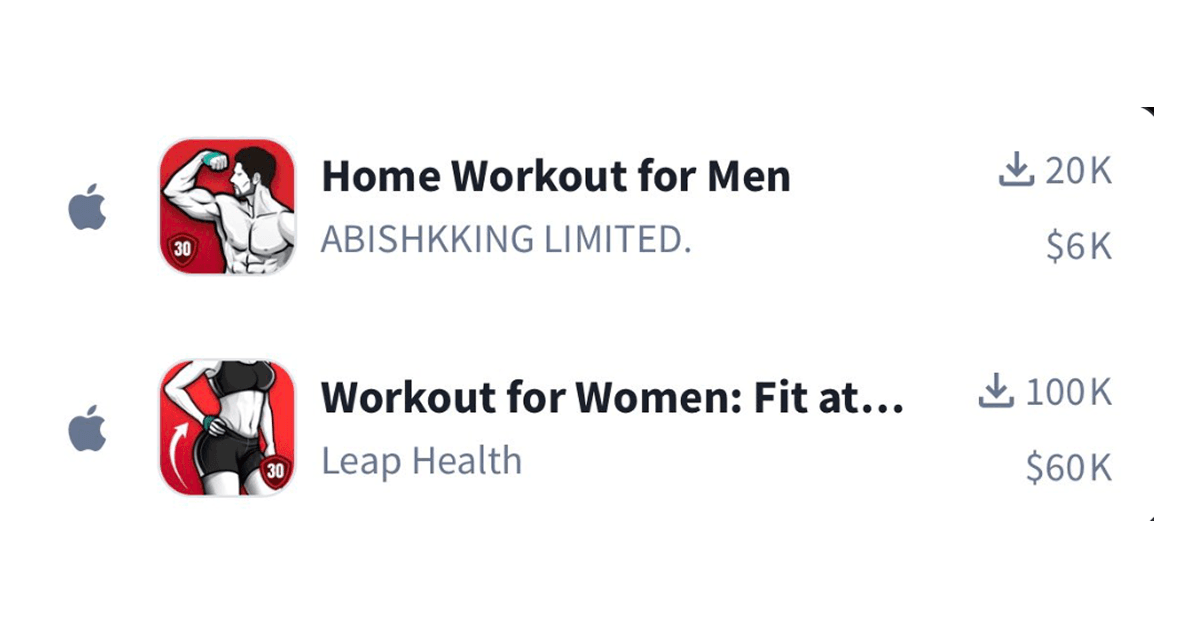
The "Pink" Strategy: Why Building Apps for Women is the Cheat Code of 2026
Men want free tools. Women pay for value. Here's the data-backed strategy indie hackers are using to 10x revenue by pivoting from "generic" to "female-focused."
![Why Every Successful App Has a Mascot Now [2026 Guide to Character-Driven Design]](/_next/image?url=https%3A%2F%2Fimages.unsplash.com%2Fphoto-1551651653-c5186a1fbba2%3Fw%3D1200%26h%3D630%26fit%3Dcrop&w=3840&q=75)
Why Every Successful App Has a Mascot Now [2026 Guide to Character-Driven Design]
Mascots are taking over top-grossing apps. Here's why character-driven design converts better and how to add one to your product.
IndieRadar Team
Daily newsletter for indie hackers. We analyze 10,000+ tweets and deliver the signal.
Read Next
The Multi-Product Playbook: How to Build a Portfolio of Apps That Print Money [2026 Guide]
Stop betting everything on one app. Here's the step-by-step playbook for building a portfolio of small software products that cross-sell and compound.
Read articleIf I Had to Start a SaaS From Scratch in 2026: A Blueprint for Indie Hackers
The exact 6-step game plan to start a SaaS from zero in 2026. Stop building first. Start with the audience, build a 7-day MVP, and launch small.
Read articleProfitable AI Micro-SaaS Ideas in 2026: Stop Building ChatGPT Wrappers
The market for generic AI tools is dead. Here’s how indie hackers can print money in 2026 by targeting hyper-specific niches, plus 5 actionable ideas you can launch this weekend.
Read article